We use cookies to ensure our site functions properly and to store limited information about your usage. You may give or withdraw consent at any time. To find out more, read our privacy policy and cookie policy.
Manage Cookies
A cookie is information stored on your computer by a website you visit. Cookies often store your settings for a website, such as your preferred language or location. This allows the site to present you with information customized to fit your needs. As per the GDPR law, companies need to get your explicit approval to collect your data. Some of these cookies are ‘strictly necessary’ to provide the basic functions of the website and can not be turned off, while others if present, have the option of being turned off. Learn more about our Privacy and Cookie policies. These can be managed also from our cookie policy page.
Strictly necessary cookies(always on):
Necessary for enabling core functionality. The website cannot function properly without these cookies. This cannot be turned off. e.g. Sign in, Language
Analytics cookies:
Analytical cookies help us to analyse user behaviour, mainly to see if the users are able to find and act on things that they are looking for. They allow us to recognise and count the number of visitors and to see how visitors move around our website when they are using it. Tools used: Google Analytics
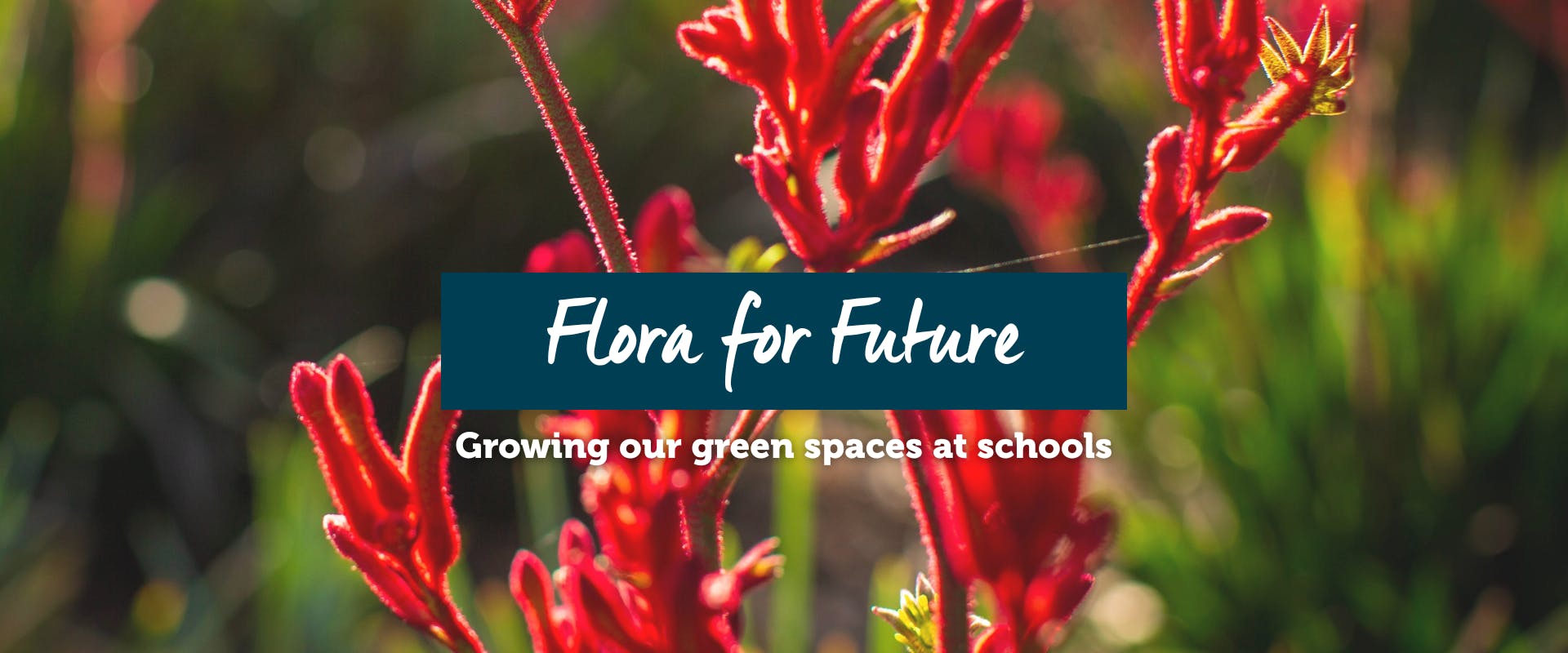
Flora for Future - Growing our Green Spaces at Schools
Share Flora for Future - Growing our Green Spaces at Schools on FacebookShare Flora for Future - Growing our Green Spaces at Schools on X (formerly Twitter)Share Flora for Future - Growing our Green Spaces at Schools on LinkedinEmail Flora for Future - Growing our Green Spaces at Schools link
Our Flora for Future program gives students the chance to gain hands-on experience with nature by providing plants for their school’s environmental areas, encouraging direct engagement with the environment and creating a deeper connection to nature.
This program aims to promote environmental responsibility through education, awareness, and support for our Urban Forest initiatives.
What kind of plants can we get?
There are 20 packs containing different plant species available for up to 25 schools.
All species are bushtucker plants which flower across all six Noongar seasons: Birak, Bunuru, Djeran, Makuru, Djilba, and Kambarang. By providing plants that flower throughout the year, schools have the opportunity to neatly tie in their growth with classroom learning.
Please note, plants are provided for educational purposes only and are not to be consumed in any way. Exact species may vary depending on nursery availability.
How do I Apply?
If you are a school staff member and would like native plants for your school, please complete the expression of interest form below.
What Happens Next?
Our environment team will review all applications, and successful applicants will be contacted in April 2026.
If successful, a project officer will contact you to discuss the best plant species for your school.
Schools will be responsible for collecting their plants from the City of Armadale Depot, Kelmscott during June 2026, to give the plants the best chance to thrive through winter.
Our Flora for Future program gives students the chance to gain hands-on experience with nature by providing plants for their school’s environmental areas, encouraging direct engagement with the environment and creating a deeper connection to nature.
This program aims to promote environmental responsibility through education, awareness, and support for our Urban Forest initiatives.
What kind of plants can we get?
There are 20 packs containing different plant species available for up to 25 schools.
All species are bushtucker plants which flower across all six Noongar seasons: Birak, Bunuru, Djeran, Makuru, Djilba, and Kambarang. By providing plants that flower throughout the year, schools have the opportunity to neatly tie in their growth with classroom learning.
Please note, plants are provided for educational purposes only and are not to be consumed in any way. Exact species may vary depending on nursery availability.
How do I Apply?
If you are a school staff member and would like native plants for your school, please complete the expression of interest form below.
What Happens Next?
Our environment team will review all applications, and successful applicants will be contacted in April 2026.
If successful, a project officer will contact you to discuss the best plant species for your school.
Schools will be responsible for collecting their plants from the City of Armadale Depot, Kelmscott during June 2026, to give the plants the best chance to thrive through winter.